


Choosing that perfect bath
I rarely use my bath these days but would definitely be reluctant to see it leave my bathroom. Simply put; showers are more space efficient, have no fill time and are quicker to use. However, a shower can never match the warming embrace of a bath on a cold winters day or the practical benefits when cleaning children. Answer the following 3 questions and choosing your new bath will be that much easier:
1. What’s my Space, Size & Situ?!
Needless to say, small bathrooms give you little choice, whereas a large bathroom will have the space to fit pretty much any bath. Make sure you have ample room to get into and out of the bath. Be careful that the bath does not make the bathroom feel overly cramped. If you have a sloping roof and plan to have a shower over your bath then you may be restricted as to which wall the bath can sit alongside.
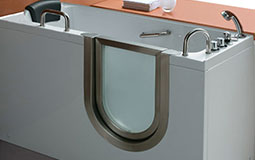
A traditional bath will be rectangular and approximately 1700mm x 700mm/750mm. If you have space restrictions consider differently shaped baths that hug the shape of your bathroom. For example, think about a quadrant corner bath, baths tapered at one end or a deeper bath, such as a walk-in bath where you can sit-up when inside.
2. Warm acrylic, Eco-wood or Classy Brassy?
I remember visiting my grandparents and using their old cast-iron bath. Its cold touch made you think twice before getting in but the bath was still in excellent condition after many years of use. The material of a bath will tell people about your tastes and style. Make sure the bath complements the other colours and materials in your bathroom. Popular options include:
- Acrylic – A popular option due to its low cost, light weight and warm feel when you get into the bath. Make sure the bath is fibreglass reinforced with a steel frame for longevity and rigidity.
- Cast Iron – These baths will be capped with porcelain enamel to give a clean finish with a long life. Cast-iron baths are cold to the touch and are also heavy so make sure your floor can support this extra weight.
- Copper – These baths will heat up quickly and can be extremely light. Copper baths can be more costly but offer a striking finish that will stand out in any bathroom.
- Natural & Composite Stone - These options are more pricey and will be very heavy so you will need to check flooring constraints. Beautiful, organic styles are timeless.

Wooden bath by Designer Lisa Dinge
- Wood – A natural material such as teak, mahogany, cedar or walnut is both intrinsically traditional yet modern. Wood is warm to the touch and is not easily affected by scratches. Make sure the wood is well treated and sealed for longevity.
3. Why take a while to style?
The final piece to the jigsaw lies is the type of bath you opt towards. Options include:
- Single or double – Will you be sharing your bathing experience with a partner? Does your bathroom have sufficient space for a larger tub. Larger tubs hold a lot more water so make filling time a consideration.
- Free-Standing or Sitting – A popular trend is to have the bath elevated from the floor using claw styled feet. These free-standing baths can sit away from the wall as they are finished on all sides. Free-standing baths are well suited to larger bathrooms.
- Recessed Baths – A bath can be recessed into your floor or built into a bespoke platform. This option allows for elegant, matching tiles or stone that surround the bath giving a distinguished finish.
Consider your options carefully and think that you are unlikely to upgrade your bathroom again for at least 5-10+ years.


Comments
Tell us what you think.
There are no comments on this entry.